

Etteilla's 72 Geniuses

Updated: Aug 27

Philosophy of the High Sciences 1 Year Anniversary 🎂🥳
A little over a year ago I put out a straight English translation of Etteilla's Philosophie des Hautes Sciences. Since then, slowly (it's going to take a LOT of time to do it right so please bear with me!), in between my other projects, I've been working on an expanded edition with the intention to go beyond just the translation and to actually break down his entire system (and to try not to lose my mind in the process! 😅) Backed by research rather than interpretation, this won't be my take on what he meant or intended; it'll be what the research actually shows.
The expanded edition will go step by step and will cover his whole system breaking it down along with citing his influences in a way that (hopefully) makes it easier to follow and to put into practice. Its a lot of material to cover (as you will soon see just from this post alone), wayy too much to post it all here in detail but I will try to touch on some of it at least, perhaps in parts, while also saving a good portion of it for the book.
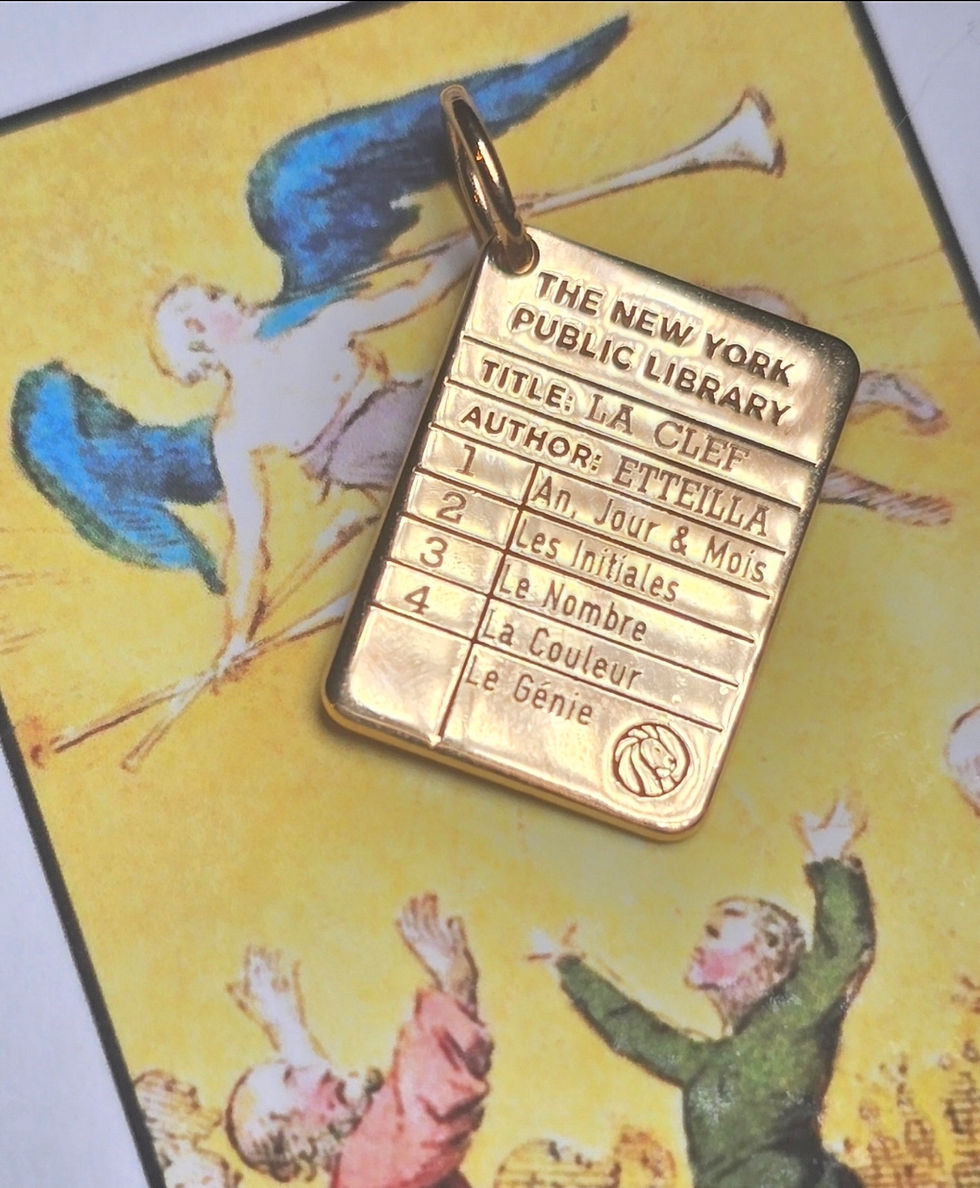
With that said, let's get into Etteilla's 72 Geniuses.


Etteilla's 72 Geniuses
This post is going to focus specifically on Etteilla's angel system: the 72 Geniuses laid out in his Philosophie des Hautes Sciences with an overview of the system, why it matters historically, and details into some of the puzzles that lead me into this deep dive (and maybe sometimes off the deep end too when the research became really difficult😆) in the first place.

Lazare Lenain
Lazare Lenain's La Science Cabalistique from 1823 has been hugely influential up until modern day. It is often credited as the first work in French to treat the 72 angels in real detail, laying out each one's specific attributes, the hours of the day they govern, their planetary associations, how to identify which of them is your own personal Genius, etc..
In that book, Lenain cites Etteilla's Philosophie des Hautes Sciences directly, multiple times, as one of his sources. While I LOVE Lenain, it is clear that Etteilla was writing on this material including attributes for each angel nearly forty years earlier than him and yet he seems to only tend to be known for his contributions to tarot and cartomancy and rarely ever (nowadays) given credit or acknowledged for the important historic contributions that he has made in other branches of the high sciences (as he would call it).
I think perhaps Etteilla's angel system may be misunderstood since it doesn't follow the usual structure one may be accustomed to and this is a big reason why I would like to endeavor to explore it more in depth and to attempt to shed more light on it starting with one of his sources and then diving a bit into his structure.

Palingène
Etteilla attributes his table of 72 Geniuses to "the Philosopher Palingène."
That name refers to Marcellus Palingenius Stellatus — a pen name, most likely belonging to the Neapolitan poet Marcello Stellato (c. 1500 – before 1551), author of a long Latin philosophical poem called the Zodiacus Vitae, moral and cosmological in nature, built around the zodiac (one chapter for each sign). It is nothing like an angel-magic manual and nowhere in Palingenius's own 16th-century Latin poem is there a table of 72 named angels with elements, or anything even close to resembling what Etteilla presents.
So where does the table Etteilla is pointing to actually come from?
A French translation of this poem was first published in 1731, translated by J.B.C. de La Monnerie. That original 1731 edition is just the poem itself in French, no 72-angel table, no Cabbalistic material, again none of the material resembling what Etteilla presents..

A second edition then came out in 1733, titled as a "new edition, revised, corrected, and augmented with notes." This is the one that matters. The "augmented with notes" part is key: this edition adds a substantial layer of editorial material that isn't in the 1731 printing at all — footnotes, commentary, and appended sections that go well beyond a straight translation of Palingenius's poem.
La Monnerie himself, in his own "Avis au Lecteur" (Notice to the Reader) — printed at the front of this 1733 edition — tells the history of how the book came to be. He explains that after finishing the translation for the original 1731 printing, he left it in the hands of a Mr. Rousset in the Hague, who took on the role of editor and wrote the Preface for that first edition.
Not much is known about La Monnerie unfortunately, he doesn't have much of a documented biography beyond being credited as this work's translator, which is such a shame because as a translator myself, I fell IN LOVE with this book and became such a huge fan of him as a translator, I really would have loved to know more about him and plan to continue to try to look deeper into him. I promise to update with any new findings.

Rousset, on the other hand, is Jean Rousset de Missy (1686–1762). He was a Huguenot writer who fled to the Netherlands as a teenager, later became a well-known historian and journalist based in The Hague, writing on figures like Peter the Great and Catherine of Russia, and was active in Dutch political and intellectual circles through the 1720s-40s.
Who wrote the notes and why do they matter?
In his "Avis au Lecteur" (Notice to the Reader) La Monnerie explains directly why this second, expanded edition exists at all: the first (1731) Holland printing sold out completely, and he noticed readers wanted notes — something to help them fully follow a philosopher covering so much ground (physics, metaphysics, morals, astronomy, and more) that not every reader would have the background for. He says he was specifically following advice Rousset himself had given, in Rousset's Preface to that first edition, recommending exactly this: a reprint with notes added.
And it's in one of those notes — a long one attached to Book XII of the poem, discussing Cabala, that the angel material actually appears. Sitting inside it is a table listing all 72 of the traditional angelic names laid out in a specific column arrangement.

And this is why translators are so cool 😎
So when Etteilla says his table of Geniuses comes from "Palingène," where he actually took it from was this specific 1733 edition's added footnote appended to the translation of Palingenius's poem by the translator nearly two centuries after Palingenius died, and not from anything Palingenius himself ever actually wrote.

Agrippa's influence
When the 72-angel table from the 1733 Palingène footnote is compared against the one in the French translation of Agrippa's De Occulta Philosophia — A. Levasseur's 1727 translation, titled La Philosophie Occulte de Henri Corneille Agrippa, divisée en trois livres, et traduite du latin, published at The Hague — the two are nearly identical. The relevant material sits in Book III, chapter 25, where Agrippa lays out the 72 names derived from the three 72-letter verses of Exodus. Same 72 names, same underlying arrangement. This isn't a coincidence or two traditions independently landing on the same list, the footnote's table is definitely drawing directly from the one in the French translation of Agrippa.

Worth noting: Levasseur's 1727 translation was the only French translation of Agrippa's work in existence for well over a century — no new French translation appeared until 1910. So this wasn't an obscure or unusual choice on the part of the translator for that footnote as it was, at the time, the one and only way to read Agrippa in French at all.
So the real chain of transmission looks like this:
Agrippa's De Occulta Philosophia, Book III → translated into French by Levasseur, 1727 → copied into the footnote of the 1733 French Palingène translation edition (by the translator J.B.C. de La Monnerie) → cited by Etteilla simply as coming from "Palingène."

Comparing the names
Comparing all the tables name by name also turns up some small but telling details. For example, at row 5 in the shared column structure, the Levasseur French translation of Agrippa names the angel Hahahel. The Palingène footnote's table has it instead as Bahahel — a one-letter copying slip among some other spelling discrepancies.

Etteilla's table, at the corresponding position (#51), also has Bahahel. Since this is an error introduced in the Palingène footnote and not present in the Levasseur translation, it confirms the specific link in the chain already laid out above: Etteilla's table is indeed following the Palingène footnote's copy (exactly as he claims), errors and all, not a separate or independent reading of Levasseur's Agrippa translation (although he was surely familiar with it).

Angel 67
Separately, at position 67, both the Levasseur translation and the Palingène footnote agree on Michaël but Etteilla's table has Mismahel at that position instead — a change Etteilla made himself, on top of the material he otherwise carried over as-is.
There's a further wrinkle specifically tied to this same angel, position 67 — the one Etteilla renamed from Michaël to Mismahel. When it comes to the actual attributes Etteilla assigns further into the text — what each Genius loves and hates — the sequence runs cleanly from 1 through 72, but position 67 has two separate entries attached to it. One (p. 91 in the original book) has this Genius devoted to Science and Wisdom, with its opposing bad Genius promoting ignorance and disorder. The other (p. 92) instead governs the peace of provincial towns, boroughs, villages..
That means there are 73 total attribute entries for a system that's only supposed to have 72 Geniuses - nothing was skipped, something extra was added and this extra entry lands on exactly the same Genius whose name Etteilla had already changed from the standard Michaël to Mismahel.. There's a LOT more to unpack here and it'll definitely all be covered in the expanded book. 😉
Etteilla's Numbering System
Here's something worth noting before getting into how Etteilla numbered his 72 Geniuses: neither his source (the table in the 1733 Palingène translation's footnote) nor his source's source (the table in the 1727 French translation of Agrippa's De Occulta Philosophia) numbers the Geniuses at all. Both just list the 72 names, laid out in a grid, with no numbers attached to any of them.
That matters because it's an indication that the specific numbering Etteilla uses for each of the 72 angels may not be something he copied from another source. It may be entirely his own invention, and it follows a very deliberate and complicated mathematical rule rather than just running down the table in whatever order it happened to be printed in which is a very Etteilla thing to do, as a self-proclaimed professor of algebra.

The Elements
To best visualize this, start by taking the four columns of the Palingène table and assigning each one to an element, in this order: Fire, Air, Water, Earth. This is the same order Etteilla lists his elements in. This part is simple enough — whichever column a name sits in tells you its element.
Where things get more complicated (because of course he can never just be simple) is the order Etteilla reads those columns in to arrive at his final numbering. Rather than reading straight down a column top to bottom, he works through the names by alternating — taking every other name instead of reading straight through in sequence.
For example, in the Fire column you'd think the order should just be Vehuiah, Jeliel, Silael.
NOPE😆. It's Vehuiah, Silael, Mahasiah — every other name, alternating. Got it? Great — so now you'd think Vehuiah is 1, Silael is 2, Mahasiah is 3.
NOPE again😅. The numbering climbs by 24 each time, making it Vehuiah = 1, Silael = 25, Mahasiah = 49.
The core of it all is this: Etteilla took a source table that never numbered anything, assigned elements by column, and then built an entirely original numbering system on top rather than reading them plainly turning an unordered list into a structured, deliberately patterned one of his own design.

Walk Through
Let's set the actual numbers aside for a moment, since jumping straight to "1, 25, 49" makes this harder to follow than it needs to be. Look instead at just the order of the names themselves, by Element column.
Here's the Fire column, listed in the sequence Etteilla actually uses going horizontally: skipping every other (Palingene table) name as you go down (vertically):
Vehuiah, Silael, Mahasiah, Achaiah, Haziel, Laviah, Jesalel, Hariel, Leviah
That's the first half of the Fire column (every odd position: 1st, 3rd, 5th, 7th, 9th, 11th, 13th, 15th, 17th).
The remaining names — Jeliel, Elemiah, Lelahel, Cahethel, Aladiah, Hahaiah, Mebahel, Hakamiah, Caliel — are the ones skipped over on this first pass; they'd come after, once Etteilla finishes this first run through.
That makes the second pass: Jeliel, Elemiah, Lelahel, Cahethel, Aladiah, Hahaiah, Mebahel, Hakamiah, Caliel
Here's the same walk-through for Air, Water, and Earth, using each column's own name list:
Air: Leuviah, Nelchael, Melahel, Nithhaiah, Jerathel, Reyel, Lecabel, Jehuiah, Chavakiah
second pass: Pahaliah, Jejazel, Hahiviah, Haaiah, Sechiah, Omael, Vasaviah, Lehaiah, Manadel
Water: Aniel, Rehahel, Bahaiel, Vevaliah, Sealiah, Azaliah, Vehuel, Hahasiah, Nanael
second pass: Haamiah, Jejazel, Michael, Jelahiah, Ariel, Michael, Daniel, Imamiah, Nithael
Earth: Mebahiah, Nemamiah, Mizrahel, Umabel, Mehiel, Damabiah, Ejael, Rochel, Hajajel
second pass: Pojel, Jejalel, Umabel, Jahhel, Annavel, Manakel, Habujah, Jabaniah, Mumiah
Same logic as Fire: each list is the odd positions (1st, 3rd, 5th, 7th, 9th, 11th, 13th, 15th, 17th) within that element's column, in order. The skipped names — the even positions — would be the second pass through each column.
Now let's add the numbers back in
Fire: Vehuiah (1) +24= Silael (25) +24= Mahasiah (49)
Air: Leuviah (2) +24= Nelchael (26) +24= Melahel (50)
Water: Aniel (3) +24= Rehahel (27) +24= Bahahel (51)
Earth: Mebahiah (4) +24= Nemamiah (28) +24= Harabel (52)
Note how the first 4 go in a pattern Fire 1, Air 2, Water 3, Earth 4
Now we circle back to Fire again for 5 and so on.
Fire: Achaiah (5) +24= Haziel (29) +24= Laviah (53)
I won't list them all but I'm sure you've got it down now.
The Geniuses Communicate Their Element to One Another
Etteilla actually attempts to explain this himself (in his usual overcomplicated, hard-to-follow way):
"A very essential observation, is to recognize the Geniuses who communicate their Element to each other; they are in this sort: 1, 26, 51, 4: 25, 50, 3, 28: 49, 2, 27, 52, which makes six legions or divisions of twelve by twelve Geniuses, which form between them twelve, a spiral line, which one divides into 360, as also 360 x 6 = 2160."
The Geniuses who communicate their Element to each other are in this pattern in increments of 25 keeping in mind that there are 72 names so the count then starts over at 72:
1 (First Fire Genius), +25= 26 (Second Air Genius), +25= 51 (Third Water Genius), +25= 4 (First Earth Genius) We land on 4 because 51 plus 25 = 76 but the names only go up to 72 so there's a remainder of 4.
which then takes us to 25 (Second Fire Genius), +25= 50 (Third Air Genius), +25= 3 (First Water Genius), +25= 28 (Second Earth Genius)... and so on..
The 360 in that quote is the number of degrees in a full circle of the zodiac. With 72 Geniuses dividing that circle evenly between them, each one governs a neat 5-degree slice (72 × 5 = 360).
The 2160 is just that same 360 multiplied by his six legions (360 × 6 = 2160). It's a number that shows up elsewhere in astrology too, most notably as the traditional length in years of a single astrological age (the Age of Pisces, the Age of Aquarius, and so on are each said to span roughly 2160 years).

The Rays
Beyond a number and an element, each Genius is also said to govern a specific "ray" — a directional slice of the lower world and this is important because its something that Lenain definitely borrowed and worked into his system.
Etteilla spends a lot of effort describing everything without ever actually giving the reader something to look at but when it comes to the rays specifically, he does something different: rather than leaving it purely abstract, he points the reader to an actual visual aid.
"To have a notion of the rays that the Geniuses govern, I see no more sensible demonstration than that which offers itself under my eyes in the Treatise of Methodical Cosmography, very elementary, of Buy de Mornas, in-8°. Lacombe, Bookseller, 1770, page & figure 196."
Buy de Mornas's Cosmographie méthodique et élémentaire (1770) is exactly what it sounds like: a geography and astronomy primer, not an occult text at all.
Etteilla never actually reproduces this diagram in his own book, he just points to it and expects the reader to go look it up. So while the 72-name table comes from the Palingène footnote (by way of Agrippa), the idea of "rays" governing different zones of the world is demonstrated with an entirely separate, seemingly mundane source: a cosmography textbook.
That's all for now
I'll leave it here, as this was already a lot to go over, and I'm only just scratching the surface. I haven't even gone fully in-depth yet and this is a fraction of the actual system, and it's only the angels.
But even from just this much, one thing should be clear: this wasn't some slapped-together nonsense that deserved to be waved off or forgotten. There was a real, coherent system here that took real thought and real work to build. I think it's just complex and difficult to follow and understand but my hope is that if I can break this down and explain it well, and make it more accessible, maybe more people can gain an appreciation for it and it can get some of the recognition that it deserves, especially because of its historic importance.
For those interested in exploring the complete system—including all 72 Geniuses with their specific loves, hates, and domains; the full numerical and cabalistic alphabet; detailed color interpretations for dozens of shades; and Etteilla's philosophical framework —the full translation of Philosophy of the High Sciences, or The Key Given to the Children of Art of Science & of Wisdom is available on Amazon.
Expanded edition planned but no ETA as of now (sorry!).
with another surprise Etteilla related card deck on the way very soon! 😉
(Join my newsletter or follow me on social media to be the first to find out when it launches!)
and please come join my Etteilla Group on Facebook a space to connect, learn, research, and deepen your understanding of the grandfather of modern cartonomancy.
Thanks so much for taking the time to read this and for supporting my dreams
With all my love and gratitude,
Heather Diane Lauvia ❤️✨


Bonjour. Merci beaucoup pour vos explications concernant les génies. Donc si on suit le tableau d'Etteilla est ce que l'on peut affecter les anges sur les arcanes mineures ( cartes de 1 à 9) de la manière suivante pour les bâtons par exemple : As de bâton Droit : 1 Véhuiah et AS de bâton Renversé : 5 Ahahiah puis sur le 2 de bâton Droit : 9 Jelalel et sur le 2 de bâton Renversé : 13 Jeliel puis sur le 3 de bâton Droit : 17 Cahethel et sur le 3 de bâton Renversé : Mebahel... ou est ce qu'il est préférable de réfléchir à une autre manière d'affecter les génies ?